Easy Korean Kimchi Recipe
Introduction
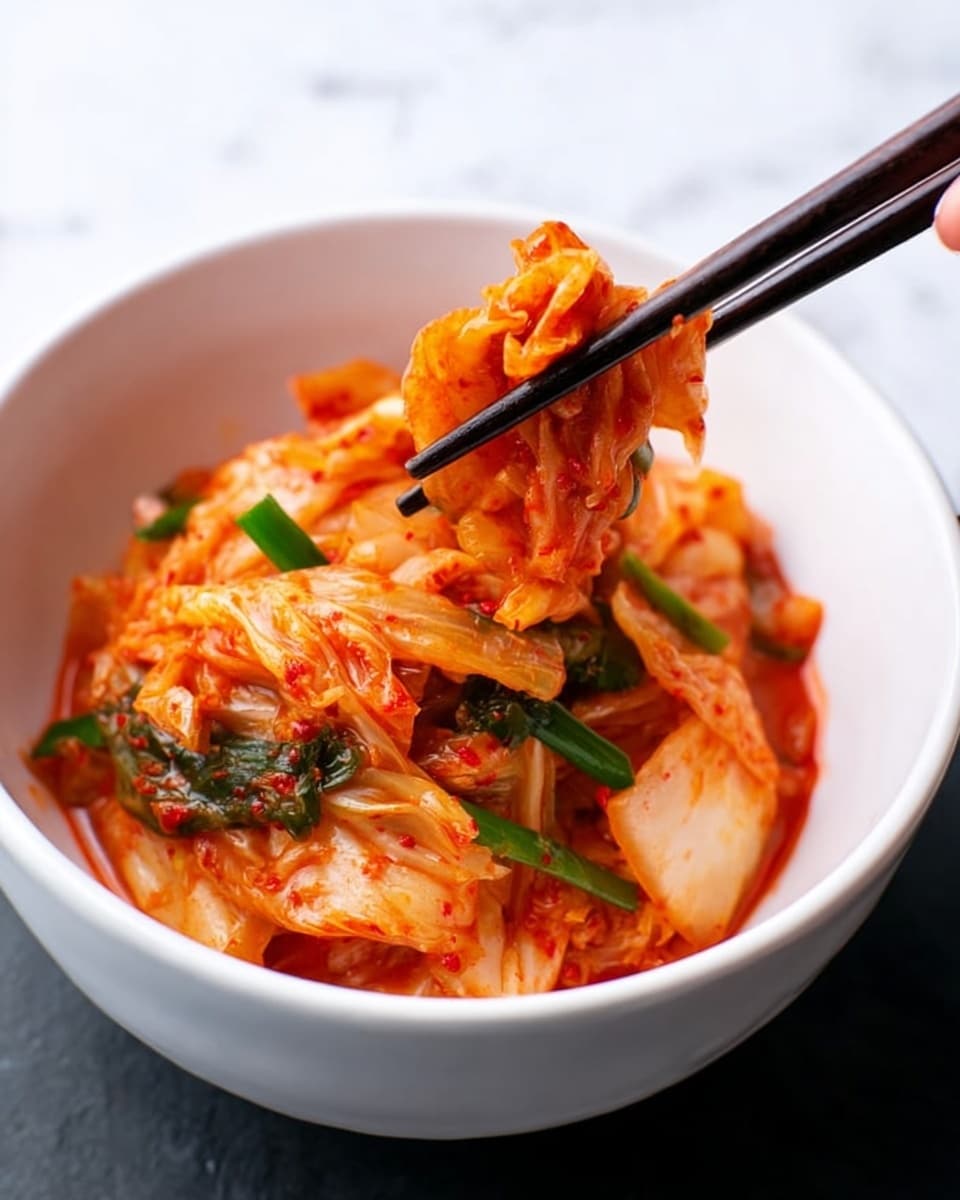
This easy Korean kimchi recipe brings the authentic flavors of fermented cabbage right into your kitchen. Bursting with spice, tang, and a subtle sweetness, homemade kimchi is a fantastic side dish that pairs well with many meals or can be enjoyed on its own.
Ingredients
- 1 (about 1kg/2.2 lb) Chinese cabbage (Napa cabbage or wombok)
- 1/3 cup sea salt
- 1/4 cup fish sauce
- 1/3 cup Gochugaru (Korean chili flakes)
- 5 garlic cloves, chopped
- 1 tbsp chopped fresh ginger
- 1 tbsp white sugar
- 1 pear, peeled and chopped
- 1 medium daikon (about 250g/9 oz), peeled and julienned
- 3 spring onions (scallions), sliced into roughly 4cm batons
Instructions
- Step 1: Cut the cabbage into quarters lengthwise, then slice each quarter into 2-3cm pieces crosswise. Rinse under cold running water and drain well. Place in a very large bowl, sprinkle with sea salt, and toss using your hands to combine. Set aside and toss every 30 minutes for 2 hours to let the cabbage soften.
- Step 2: While the cabbage is resting, combine fish sauce, Gochugaru, garlic, ginger, sugar, and pear in a food processor. Blend until smooth to create the chili paste.
- Step 3: After 2 hours, drain and rinse the cabbage thoroughly to remove excess salt. Taste to ensure it’s not too salty. Rinse the bowl, return the cabbage to it, then add the julienned daikon and spring onions.
- Step 4: Add the chili paste to the cabbage mixture. Using tongs or your hands (wear gloves if preferred), massage the paste evenly throughout the vegetables. Taste and adjust seasoning with more chili flakes or sugar if desired. Transfer the kimchi to sterilized jars, seal, and leave at room temperature for 3 days to ferment and develop flavors. Afterward, store in the refrigerator for up to 6 months.
Tips & Variations
- Use gloves when mixing to protect your hands from the chili and to avoid staining.
- Adjust the amount of Gochugaru to control the spice level to your preference.
- If you don’t have a food processor, finely chop the garlic, ginger, and pear and mix well for a chunkier texture.
- Try substituting pear with apple if you prefer a milder sweetness.
- Keep the kimchi submerged in its juice inside the jar to prevent mold during fermentation.
Storage
Store kimchi in airtight sterilized jars in the refrigerator after the initial 3-day fermentation at room temperature. Properly stored, it will keep well for up to 6 months. The flavor will deepen and become tangier over time. When serving, use clean utensils to avoid contamination. You can enjoy kimchi cold straight from the fridge or let it come to room temperature for fuller flavor.
How to Serve
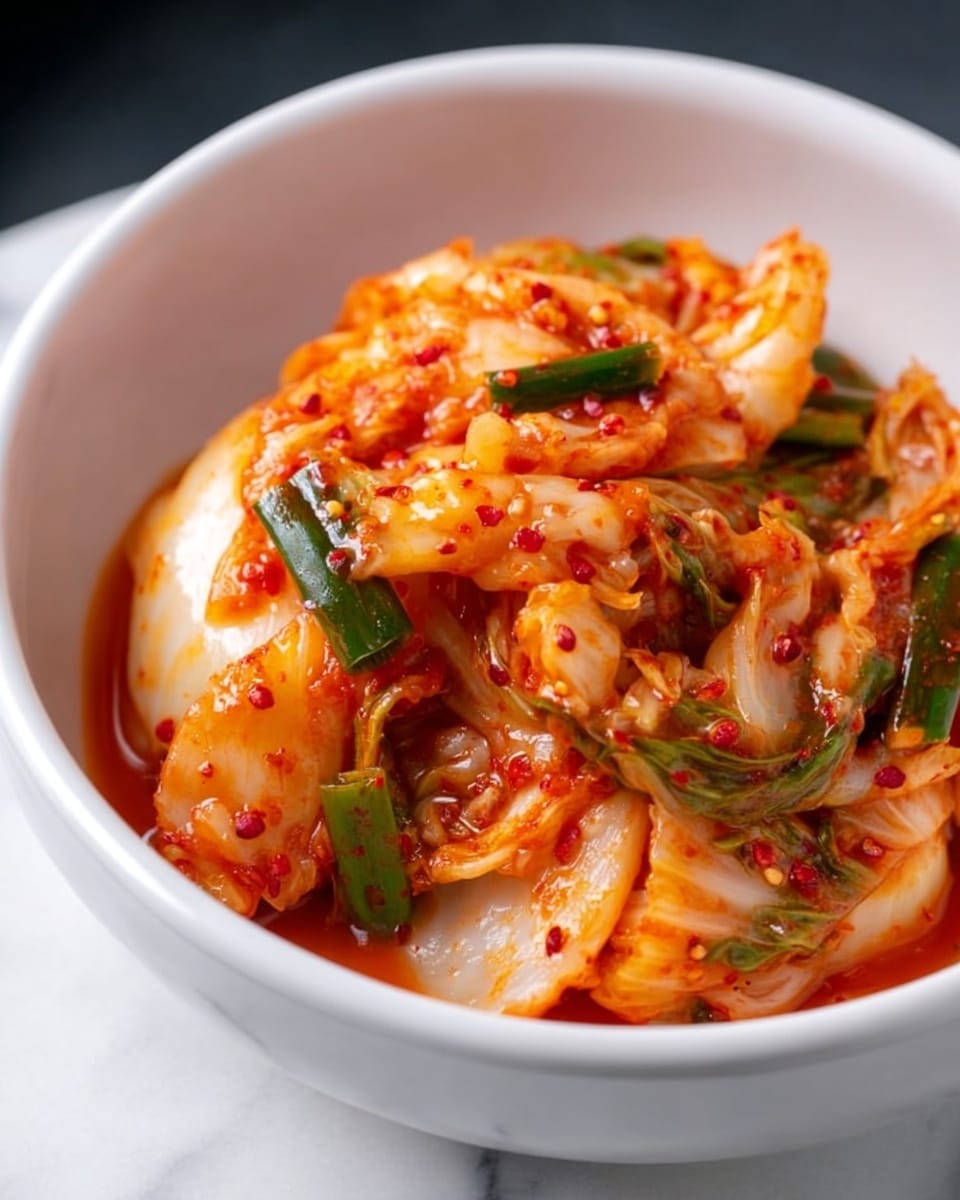
Serve this delicious recipe with your favorite sides.
FAQs
How spicy is this kimchi?
The heat level depends on the amount of Gochugaru used. This recipe provides moderate spiciness, but you can adjust the chili flakes to make it milder or hotter according to your taste.
Can I use a different type of cabbage?
Chinese cabbage (Napa cabbage) is traditional and ideal for kimchi due to its texture and flavor. However, you could try using regular green cabbage as a substitute, but the taste and fermentation may be slightly different.
Print
Easy Korean Kimchi Recipe
- Total Time: 2 hours 30 minutes (plus 3 days fermentation)
- Yield: About 1.5 liters of kimchi 1x
- Diet: Gluten Free
Description
This Easy Korean Kimchi recipe offers a flavorful and authentic homemade kimchi using Napa cabbage, daikon, and a spicy chili paste mixture. Fermented traditionally, it delivers the perfect balance of tangy, spicy, and umami flavors that develop beautifully over a few days at room temperature before refrigeration.
Ingredients
Main Ingredients
- 1 (about 1kg/2.2 lb) Chinese cabbage (Napa cabbage or wombok)
- 1/3 cup sea salt
- 1/3 cup Gochugaru (Korean chili flakes)
- 5 garlic cloves, chopped
- 1 tbsp chopped fresh ginger
- 1 tbsp white sugar
- 1 pear, peeled, chopped
- 1 medium daikon (about 250g/9 oz), peeled and julienned
- 3 spring onions (scallions), sliced into roughly 4cm batons
- 1/4 cup fish sauce
Instructions
- Prepare and salt the cabbage: Cut the Chinese cabbage into quarters lengthways and then crosswise into 2-3 cm pieces. Rinse under cold running water and drain well. Place in a very large bowl, sprinkle evenly with sea salt, and toss using your hands to coat. Set aside and toss every 30 minutes for 2 hours to allow the salt to draw out moisture and soften the cabbage.
- Make the chili paste: While the cabbage is salting, combine fish sauce, Gochugaru, chopped garlic, ginger, white sugar, and peeled chopped pear in a food processor. Blend until a smooth and spicy chili paste forms.
- Rinse and combine vegetables: Drain the salted cabbage and rinse thoroughly under running water to remove excess salt. Taste to confirm it is no longer too salty. Drain well. Rinse the bowl, then return the cabbage to it. Add the julienned daikon and sliced spring onions.
- Mix with chili paste: Add the prepared chili paste to the cabbage mixture. Using tongs or gloved hands, massage the paste thoroughly into the vegetables, ensuring even distribution. Taste and adjust seasoning with additional chili flakes or sugar if needed.
- Jar and ferment: Transfer the kimchi tightly into sterilized jars using tongs. Seal and leave the jars at room temperature for 3 days to ferment and develop flavor. Afterward, store the kimchi in the refrigerator where it will continue developing and remain good for up to 6 months.
Notes
- Wear gloves when mixing the chili paste with vegetables to protect skin from irritation.
- Use sterilized jars to prevent contamination and spoilage during fermentation.
- Fermentation times may vary based on room temperature; warmer rooms will speed up fermentation.
- If you prefer less heat, reduce the amount of Gochugaru chili flakes.
- Kimchi flavor improves and deepens with longer fermentation, but consume within 6 months for best quality.
- Prep Time: 2 hours 30 minutes
- Cook Time: 0 minutes
- Category: Condiment
- Method: No-Cook
- Cuisine: Korean
Keywords: Korean kimchi, fermented vegetables, Napa cabbage kimchi, homemade kimchi, spicy kimchi, traditional kimchi